Introduction: The Rise of the Urban Agrarian
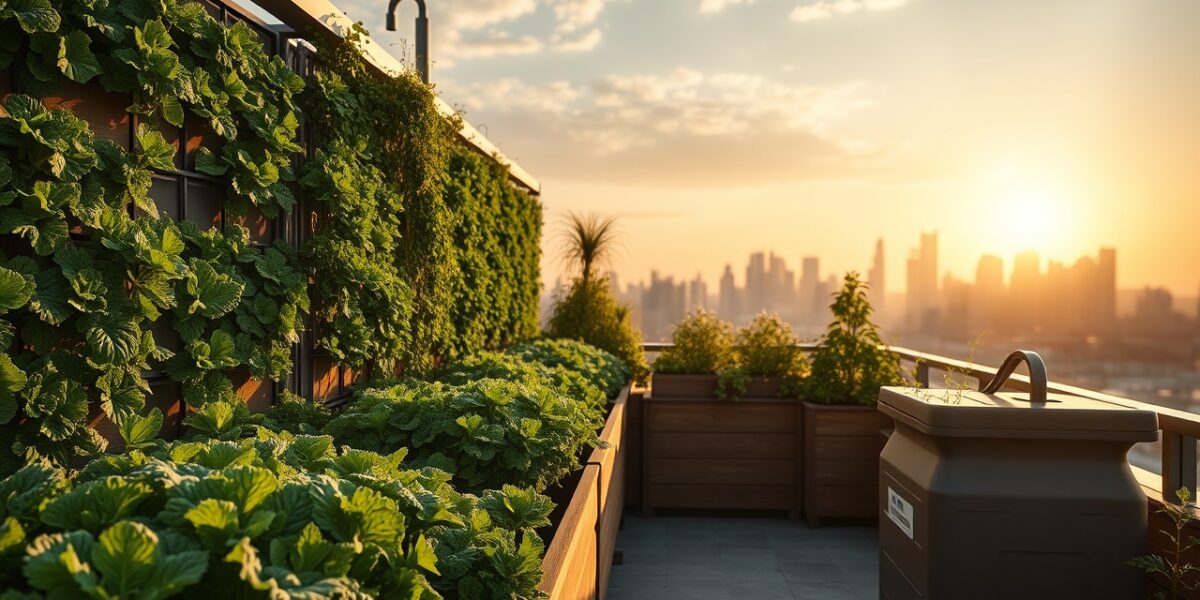
In an era of rapid urbanization, the disconnect between the modern consumer and the origin of their food has never been wider. As concrete jungles expand, the concept of ‘food miles’—the distance food travels from farm to plate—has become a critical environmental concern. Sustainable urban gardening emerges not merely as a hobby, but as a necessary intervention to create resilient, self-sufficient city ecosystems. By utilizing rooftops, balconies, and neglected alleyways, urban residents can transform sterile environments into productive, carbon-sequestering oases.
The Philosophy of Sustainability in the City
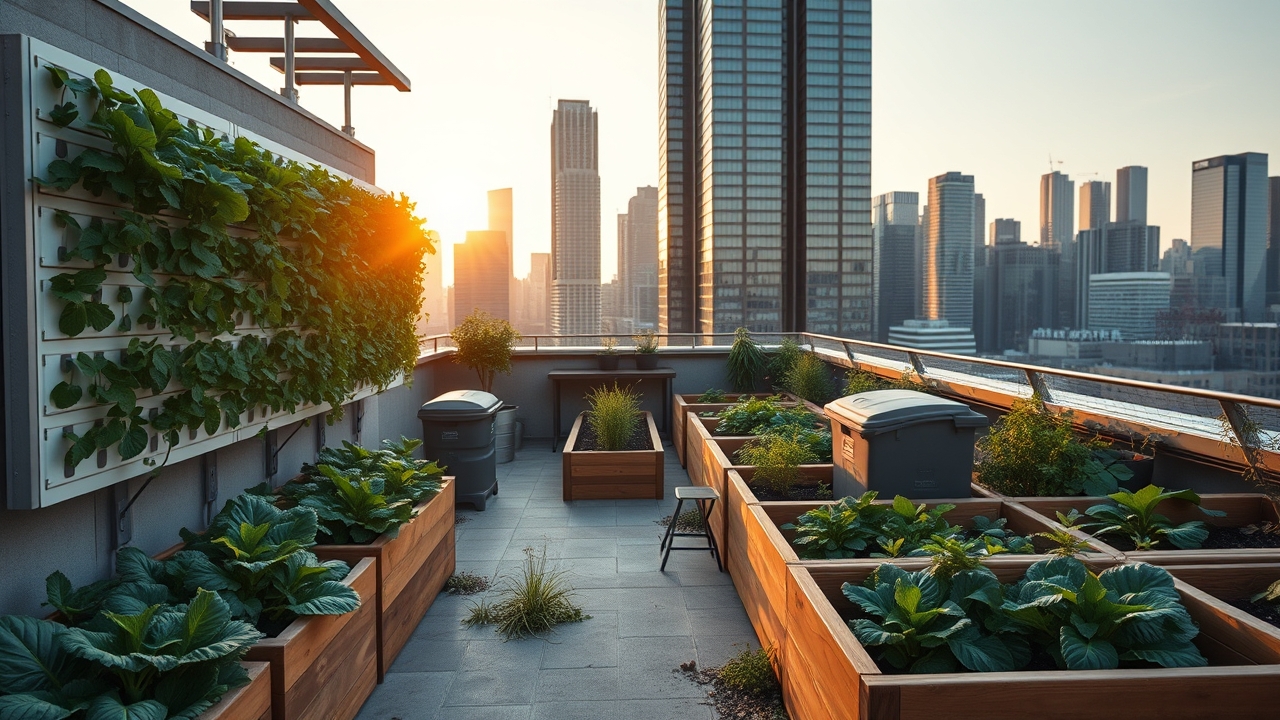
Sustainable urban gardening differs from traditional gardening in its emphasis on closed-loop systems. The goal is to minimize external inputs (like synthetic fertilizers and municipal water) while maximizing the output of nutrients and biodiversity. This approach involves mimicking natural ecosystems within an artificial landscape, focusing on soil regeneration, pollinator support, and the reduction of organic waste through composting.
1. Assessing Your Urban Space
Before planting a single seed, a thorough audit of your available space is required. Urban environments present unique challenges, including wind tunnels, rain shadows, and varying light intensities.



Light Mapping
Most edible plants require at least 6 to 8 hours of direct sunlight. However, urban spaces are often shaded by towering buildings. To optimize your garden, perform a ‘light map’ by observing your space every two hours for a full day. Areas with full sun are ideal for tomatoes, peppers, and squash, while partial shade (3-6 hours) is perfect for leafy greens like spinach, arugula, and various herbs.
Weight Constraints and Structural Integrity
For those gardening on balconies or rooftops, weight is a primary concern. Wet soil is surprisingly heavy. To mitigate this, use lightweight growing mediums such as coconut coir or perlite mixed with organic compost. Ensure that your containers are placed over load-bearing walls or beams, and always consult a structural engineer when planning large-scale rooftop installations.
2. Soil Health: The Foundation of Urban Growth
In the city, you cannot simply dig a hole in the ground. Urban soil is often contaminated with heavy metals like lead or arsenic from old paint and industrial runoff. Therefore, the use of raised beds or containers is non-negotiable for safety.
Creating the Perfect Urban Mix
A sustainable soil mix should be a balance of aeration, water retention, and nutrient density. A recommended ratio is: 40% high-quality organic compost, 30% coconut coir (a sustainable alternative to peat moss), and 30% perlite or vermiculite for drainage. This mixture ensures that roots can breathe while retaining enough moisture to survive the heat-island effect common in cities.
The Magic of Urban Composting
Waste is a resource in the wrong place. Composting is the heartbeat of a sustainable garden. For those with limited space, Vermicomposting (using red wiggler worms) is the gold standard. A small bin tucked under a kitchen sink can transform vegetable scraps into ‘black gold’—a nutrient-dense casting that outperforms chemical fertilizers. Alternatively, Bokashi fermentation allows for the composting of meat and dairy, which are typically avoided in traditional bins, making it ideal for the urban apartment dweller.
3. Water Management and Conservation
Water is a precious resource, and relying solely on treated tap water is neither sustainable nor ideal for plant health due to chlorine and fluoride levels.
Rainwater Harvesting
Installing rain barrels on downspouts is one of the most effective ways to reduce your environmental footprint. Rainwater is naturally soft and slightly acidic, which plants prefer over alkaline city water. Even a small balcony can utilize a drip-collection system to gather moisture during storms.
Self-Watering Systems and Hydroponics
To combat the rapid evaporation caused by wind and heat on balconies, self-watering containers (sub-irrigation planters) are highly effective. These systems use a reservoir at the bottom, allowing plants to wick up water as needed. For those seeking maximum efficiency, Hydroponics and Aquaponics offer a way to grow food without soil. By circulating nutrient-rich water directly to the roots, these systems can use up to 90% less water than traditional gardening.
4. Strategic Plant Selection for Small Spaces
Maximizing yield per square inch is the primary goal of the urban gardener. The key is ‘verticality’ and ‘companion planting’.
Vertical Gardening Techniques
When horizontal space is limited, go up. Utilize trellises, wall-mounted pockets, and hanging baskets. Vining crops such as pole beans, cucumbers, and certain varieties of squash can be trained to grow upward, leaving the ground clear for smaller crops. Vertical towers can also be used to grow strawberries and herbs in a stacked configuration.
Companion Planting for Natural Pest Control
In a sustainable garden, we avoid chemical pesticides. Instead, we use companion planting to create a biological defense system. For example, planting marigolds alongside tomatoes deters nematodes and aphids. Planting basil near peppers not only improves the flavor of the crop but also repels flies and mosquitoes. Integrating flowering herbs like lavender and borage attracts bees and butterflies, ensuring high pollination rates for your vegetables.
5. Managing the Urban Microclimate
Cities are ‘heat islands,’ meaning they retain more heat than rural areas. This can lead to premature bolting (when plants go to seed too early) or scorched leaves.
Cooling Strategies
Using light-colored containers can reflect sunlight and keep root systems cool. Mulching is another essential technique; a layer of straw or shredded bark prevents water evaporation and regulates soil temperature. For extremely hot balconies, installing a breathable shade cloth can protect sensitive greens from the midday sun.
6. The Social Dimension: Community Gardens and Seed Saving
Sustainable urban gardening is not just an individual act; it is a community effort. Community gardens transform vacant lots into social hubs, fostering food security and mental well-being.
Seed Saving and Biodiversity
To truly close the loop, gardeners should move away from buying hybrid seeds every year and instead practice seed saving. By selecting the strongest, most flavorful fruits from their harvest, urban gardeners can develop ‘landrace’ varieties—plants that are genetically adapted to the specific microclimate of their city. Sharing these seeds through local seed libraries promotes genetic diversity and reduces dependence on industrial seed corporations.
Conclusion: The Future of the Edible City
The transition toward sustainable urban gardening is a powerful act of rebellion against the industrial food complex. While the challenges of space, light, and pollution are real, the rewards far outweigh the effort. By integrating composting, rainwater harvesting, and vertical planting, we can turn our cities into productive landscapes that feed our bodies and soothe our minds.
As more people embrace the role of the urban agrarian, we move closer to a future where every rooftop is a farm, every balcony is a pollinators’ sanctuary, and the distance from farm to table is measured in footsteps rather than miles. Start small—a single pot of basil or a small worm bin—and contribute to the greening of the concrete jungle.
For further reading, see related references on Wikipedia.
Leave a Reply