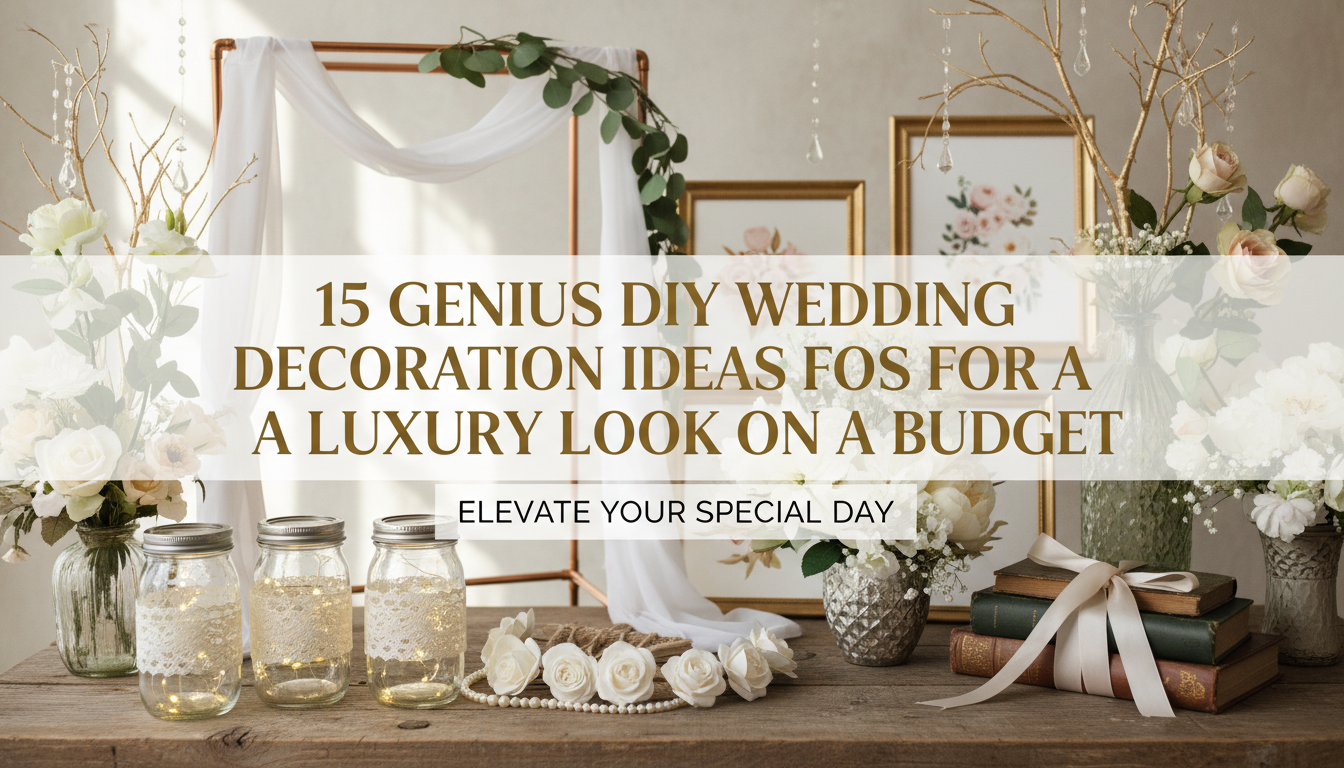
Planning a wedding often feels like a balancing act between a Pinterest-perfect vision and a realistic bank balance. The term “luxury” in the wedding industry usually carries a hefty price tag, but high-end aesthetics are more about intentional design, cohesive textures, and attention to detail than they are about the total spend. By strategically choosing DIY projects that offer the highest visual impact, you can create an atmosphere that feels curated and expensive without the boutique markup.
The secret to successful DIY wedding decor is avoiding the “homemade” look. This is achieved by using high-quality materials, sticking to a sophisticated color palette, and knowing which elements are worth your time. Below are 15 genius DIY ideas designed to elevate your wedding day to a luxury level on a modest budget.
1. Upcycled Mirror Seating Charts
Nothing says “grand estate wedding” like an oversized, ornate mirror. Instead of renting one, scour local thrift stores or Facebook Marketplace for large, gold-framed mirrors. Use a white chalk marker or custom vinyl decals to list your guest names and table assignments. The reflection adds depth to your venue and creates a high-end focal point for the reception entrance.
2. Monochromatic Floral Runners
Professional florists often charge thousands for lush table runners. You can mimic this look by using a “monochromatic” approach. Stick to one type of flower (like white carnations or baby’s breath) and pack them tightly together in low trays. By using a single color, the texture becomes the focus, creating a modern, high-fashion aesthetic that looks far more expensive than a multi-colored bouquet.
3. Velvet Ribbon Accents
Luxury is all about tactile experiences. Swapping standard satin or organza for heavy velvet ribbon can instantly elevate your stationery, bouquets, and place settings. Tie long, trailing velvet ribbons around your bridal bouquet or use thin velvet cord to secure napkins. Choose deep jewel tones or muted earth tones to maintain a sophisticated vibe.
4. Custom Wax Seals for Menus
Personalization is a hallmark of luxury weddings. Adding a wax seal to your menus or place cards provides an old-world, artisanal feel. You can purchase a custom stamp with your monogram for a small fee and use glue-gun wax sticks to produce dozens of seals in minutes. It’s a small detail that guests will definitely notice and touch.
5. Strategic “Invisible” Lighting
Lighting is the most underrated tool in wedding decor. Instead of basic fairy lights, use battery-operated LED “up-lights” tucked behind potted plants or at the base of architectural features. This creates a dramatic, wash-of-color effect often seen in luxury ballroom events. Avoid “cool” blue tones; stick to “warm white” or “amber” for a glow that mimics expensive candlelight.
6. Hand-Painted Taper Candles
Plain white candles are functional, but hand-painted tapers are art. Use non-toxic acrylic paint mixed with a tiny bit of candle-painting medium to add delicate floral patterns or gold leaf to standard taper candles. When placed in vintage brass holders, these become bespoke centerpieces that look like they were sourced from a high-end boutique.
7. Floating Floral Clouds
If your venue has high ceilings, “floral clouds” are a genius way to fill the space without the cost of massive floor arrangements. Using chicken wire as a base, weave in dried baby’s breath or pampas grass. These materials are lightweight, relatively inexpensive when bought in bulk, and create a dreamlike, ethereal installation that serves as a stunning backdrop for photos.
8. Acrylic Signage with Gold Leaf
Acrylic is a staple in modern luxury weddings because of its clean, glass-like appearance. Buy inexpensive acrylic sheets from a hardware store and apply gold leaf to the back in an abstract, “shattered” pattern. Flip it over and write your “Welcome” message or bar menu on the front. The gold leaf adds a layer of opulence that hides any DIY imperfections.
9. Fabric Ceiling Draping
Transform a standard community hall or tent by draping long bolts of sheer chiffon or voile from the center point of the ceiling to the walls. This softens the architecture and creates an intimate, “enclosed” feeling. Focus on the draping itself rather than adding lights to it; the fabric alone provides a cleaner, more sophisticated look.
10. Potted Tree “Orchards”
Instead of expensive cut floral arrangements that wither, use potted trees like olive or citrus to line your aisle or frame your altar. You can often find these at local nurseries. Wrap the plastic pots in high-quality linen or place them in oversized wicker baskets. Post-wedding, you can plant them in your garden or sell them to recoup your costs.
11. Pressed Flower Table Numbers
For a vintage or garden-luxury aesthetic, press wildflowers or greenery between two panes of glass in a floating frame. Use gold vinyl numbers or a metallic marker to indicate the table number. This DIY project looks like a curated museum display and adds a delicate, organic element to your tablescape.
12. Scented Stationery
Luxury is a multi-sensory experience. Lightly spritz your wedding programs or place cards with a signature scent (like sandalwood, rose, or bergamot) 24 hours before the event. Store them in a sealed box so the paper absorbs the fragrance. When guests pick up their program, the subtle scent creates an immediate “high-end hotel” impression.
13. The “Double-Layer” Tablecloth Technique
To get that thick, expensive-looking table drape seen in bridal magazines, use two tablecloths. Start with a standard polyester floor-length cloth, then layer a slightly smaller linen or textured gauze runner over the top. The added volume and layered textures prevent the table from looking “flat” or cheap.
14. Vintage Brass Candlestick Groupings
Uniformity can sometimes look mass-produced. For a luxury feel, collect mismatched brass candlesticks from thrift stores. Group them in clusters of three or five at varying heights. The patina of the old metal combined with the flickering light creates a timeless, “old-money” atmosphere that brand-new decor simply can’t replicate.
15. Designer-Inspired Escort Card Wall
Instead of laying cards flat on a table, create a vertical “wall” using a large wooden lattice or a fabric-covered foam board. Use gold-headed pins to hang the cards. This turns a functional necessity into a large-scale decor installation. If you have the budget, hang a single flower bud next to each name for an extra touch of elegance.
Comparison: DIY Luxury vs. Standard Decor
| Feature | Standard Budget Decor | DIY Luxury Approach |
|---|---|---|
| Color Palette | Multiple bright colors | Monochromatic or muted tones |
| Materials | Plastic, polyester, paper | Acrylic, velvet, linen, brass |
| Florals | Small, varied bouquets | Massed single-species “clouds” |
| Finishing | Mass-produced signage | Hand-painted or wax-sealed details |
Pros and Cons of DIY Wedding Decor
While DIY-ing your wedding decor can save thousands, it is important to weigh the creative freedom against the logistical demands.
Pros
- Significant Cost Savings: You bypass the 300-500% markup often applied by wedding vendors.
- Full Creative Control: Every detail is tailored specifically to your unique vision and color palette.
- Sustainability: Upcycling thrifted items like mirrors and brass reduces the environmental impact of your wedding.
- Memorable Details: Guests often appreciate the personal touch and effort put into handmade elements.
Cons
- Time Intensive: High-end DIY requires hours of sourcing, assembling, and testing.
- Stress Factor: Managing decor setup on the morning of the wedding can be overwhelming without a coordinator.
- Hidden Costs: Tools, adhesives, and failed “trial runs” can add up if you aren’t careful.
Frequently Asked Questions
How far in advance should I start my DIY wedding projects?
For non-perishable items like signage, wax seals, and ribbon prep, start 4 to 6 months before the wedding. Anything involving fresh florals or greenery should be done no more than 24-48 hours before the event to ensure freshness. Always do a “prototype” of your idea 6 months out to ensure it’s feasible.
Where is the best place to source luxury DIY materials?
Look beyond the craft store. Estate sales and thrift stores are gold mines for brass, glass, and mirrors. For textiles, check wholesale fabric suppliers rather than retail craft shops. For bulk flowers, consider local flower markets or reputable online wholesalers like FlowerMoxie or FiftyFlowers.
What is the one DIY project that offers the most “bang for your buck”?
Upgraded lighting. Swapping standard venue lighting for warm-toned LED up-lights and dozens of flickering candles (real or high-quality LED) provides the most immediate “luxury” transformation for the least amount of effort and money.
How do I make sure my DIY doesn’t look “cheap”?
The “Golden Rule” of luxury DIY is to limit your projects. Instead of DIY-ing 20 small things poorly, choose 3 large projects (like a seating chart, lighting, and table linens) and execute them perfectly. Use high-quality textures like linen and velvet, and maintain a strict, sophisticated color palette.
Can I DIY my wedding flowers and still have them look professional?
Yes, if you keep it simple. The biggest mistake DIYers make is trying to create complex, multi-bloom arrangements. Stick to “massing” one type of flower or using heavy greenery. Monochromatic arrangements are much more forgiving and naturally look more “designer” than mixed bouquets.
—
Topic: DIY wedding decoration ideas on a budget
Tags: #Genius #DIY #Wedding #Decoration #Ideas #Luxury #Budget